
Realme P4 Power 5G
Realme P4 Power Key Features
Brand: Realme
Release Date: 5 February 2026
Price in Kenya: KSh 54,500
Display: 6.8-inch AMOLED, 1280 x 2800 (1.5K), 144Hz, HDR10+, 1 billion colours, 600 nits typical, 1,800 nits (HBM), 6,500 nits peak
Protection: Corning Gorilla Glass 7i front, IP69, MIL-STD-810H compliant
Processor: MediaTek Dimensity 7400 Ultra (4nm), octa-core (4x 2.6GHz Cortex-A78 + 4x 2.0GHz Cortex-A55), Mali-G615 MC2 GPU
RAM: 8GB or 12GB
Storage: 128GB or 256GB UFS 3.1; no card slot
Rear Camera: 50MP f/1.8 main (1/1.95″, PDAF, OIS) + 8MP f/2.2 ultrawide (112°), colour spectrum sensor, LED flash
Front Camera: 16MP f/2.4
Video Recording: Rear 4K at 30fps, 1080p at 30/60/120/240fps with gyro-EIS; front 1080p at 30fps
Battery: 10,001mAh silicon-carbon (Si/C)
Charging: 80W wired (50% in 36 minutes), 55W PPS, 13.5W PD/QC, 27W reverse wired, bypass charging
Connectivity: 5G, dual Nano-SIM, dual-band Wi-Fi 5, Bluetooth 5.4 (aptX HD, LHDC 5), GPS, Galileo, GLONASS, BDS, infrared blaster, USB-C 2.0 with OTG; no NFC
Audio: Loudspeaker (-25.8 LUFS, rated very good); no 3.5mm jack
Build: Gorilla Glass 7i front, plastic frame, plastic back
Water & Dust Resistance: IP69 (high-pressure water jets; immersible to 1.5m for 30 minutes)
Dimensions & Weight: 162.3 x 76.2 x 9.1mm; 219g
Operating System: Android 16, Realme UI 7.0, up to 3 major OS updates
Security: Under-display optical fingerprint sensor
KSh 54,500
Warranty: Registered by the buyer with the manufacturer. Need help? Message us and we'll guide you.
Specs: Realme P4 Power 5G details checked against official data (17th November 2026). Spotted something off? Tell us on WhatsApp or call 0728 270 084.

Cash on Delivery within Nairobi
Pay on Order outside Nairobi
Realme P4 Power Price in Kenya, Full Specifications and Review (2026)
The Realme P4 Power price in Kenya is KSh 54,500. Announced on 29 January 2026 and on sale from 5 February, the P4 Power (also sold as the Realme P4 Power 5G) is one of the most unusual mid-range phones of the year. Realme built it around a single goal: making battery anxiety disappear. Its 10,001mAh battery is double the 5,000mAh capacity that has been the industry standard for years. Yet the phone measures just 9.1mm thick and weighs 219g, because it uses a new silicon-carbon battery chemistry that stores far more energy in the same space.
The battery isn’t the only standout. Realme pairs it with 80W fast charging that reaches 50% in 36 minutes, 27W reverse wired charging that can top up another phone, and bypass charging that powers the phone directly while gaming. The P4 Power also carries an IP69 rating, the highest water-resistance rating used on phones, along with MIL-STD-810H compliance. Its 6.8-inch AMOLED display has a sharp 1.5K resolution, a 144Hz refresh rate and up to 1,800 nits in high-brightness mode. Inside is MediaTek’s efficient 4nm Dimensity 7400 Ultra chipset with up to 12GB of RAM. Around the back, a 50MP main camera has optical image stabilisation (OIS) and records 4K video. It ships with Android 16 and Realme UI 7.0, and Realme promises three major OS updates.
In independent testing, the P4 Power scored an active use battery result of 25 hours 35 minutes, roughly double what most mid-range phones manage. For most people, that means charging every two to three days instead of every night. The phones most people carry are fine on a normal day but start to struggle when the day runs long. A ride-hailing driver running navigation for 10 hours, a field sales officer travelling upcountry, a student in a hostel with one socket for six people, or a family dealing with an evening blackout all hit the limits of a 5,000mAh battery regularly. The P4 Power is designed for exactly those people.
The phone has clear weaknesses that buyers should weigh. There’s no NFC for contactless payments and no microSD slot for extra storage. The frame and back are plastic rather than metal and glass. Realme promises three OS updates, while Samsung commits to considerably more on its recent Galaxy A phones. The secondary camera is a modest 8MP ultrawide. And the full 80W charging speed works only with Realme’s own charger; standard USB-C phone chargers manage just 13.5W.
The comparison at Phonesstore Kenya is the Samsung Galaxy A57 5G, priced from KSh 46,000 to KSh 57,500. It’s the phone many buyers in this price range will cross-shop. The two represent opposite philosophies. The A57 is slimmer, lighter and more refined, with NFC and Samsung’s longer software support. The P4 Power doubles the battery, nearly doubles the charging speed, and adds IP69 protection, a sharper 1.5K display and a faster 144Hz refresh rate.
You can buy the Realme P4 Power from Phonesstore Kenya, where it is available with competitive pricing and nationwide delivery across Kenya.
Realme P4 Power Full Specifications
Launch
| Feature | Specification |
|---|---|
| Announced | 29 January 2026 |
| Released | 5 February 2026 |
| Also Known As | Realme P4 Power 5G |
| Model | RMX5107 |
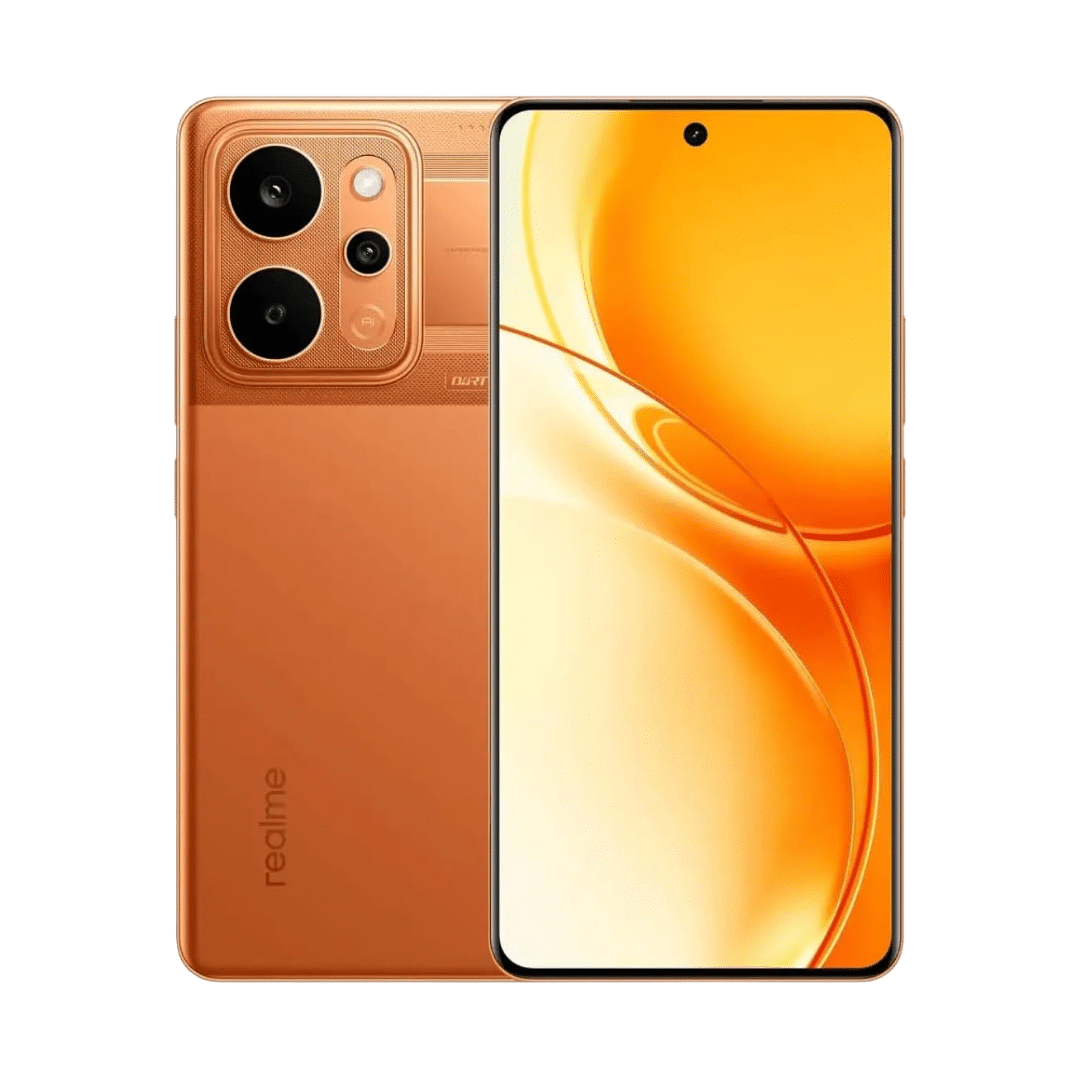
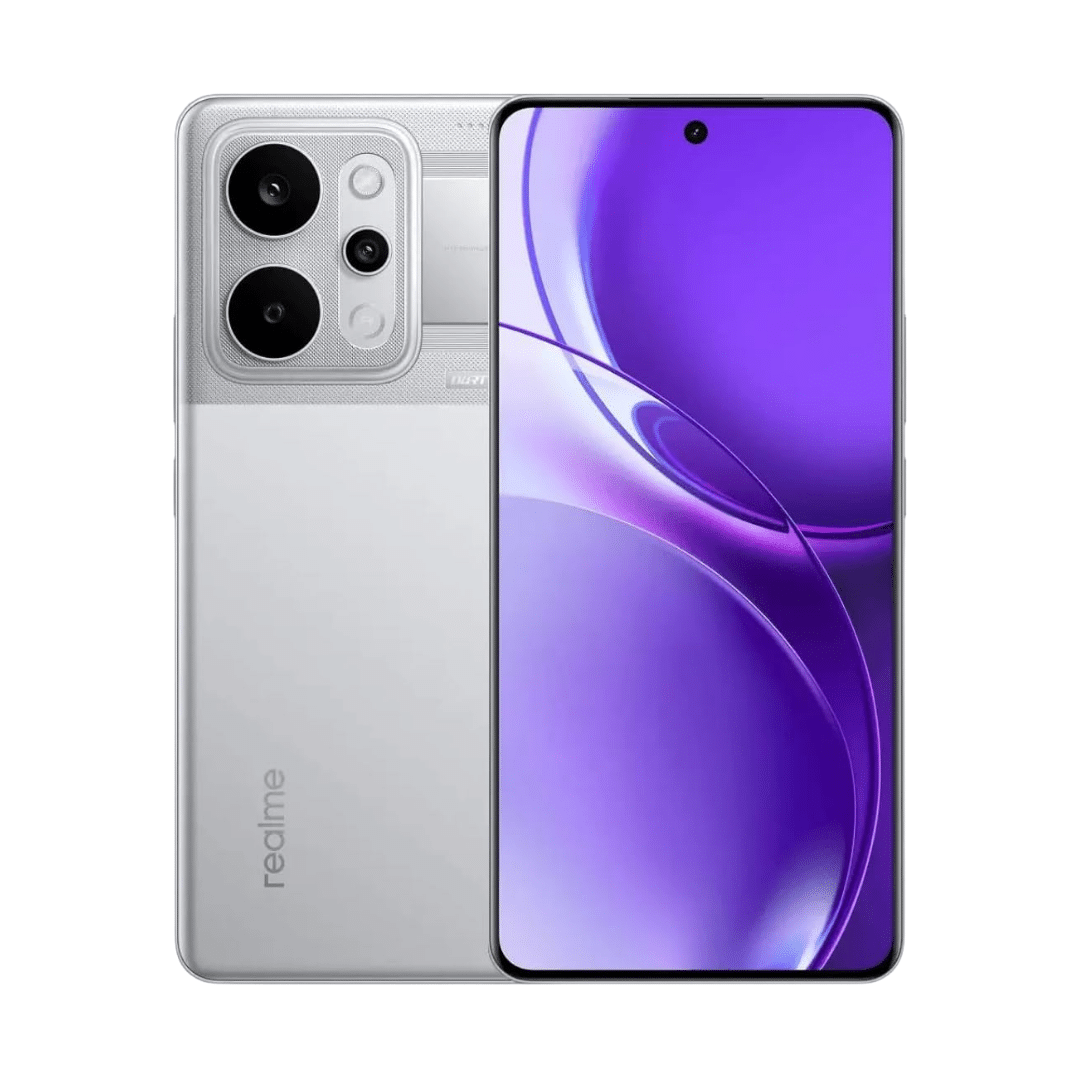
| Colours | Flash Orange, Power Silver, Blue |
Body
| Feature | Specification |
|---|---|
| Dimensions | 162.3 x 76.2 x 9.1mm |
| Weight | 219g |
| Build | Gorilla Glass 7i front, plastic frame, plastic back |
| SIM | Dual Nano-SIM |
| Water and Dust | IP69 (high-pressure water jets; immersible to 1.5m for 30 minutes) |
| Military Standard | MIL-STD-810H compliant (does not guarantee ruggedness in extreme conditions) |
Display
| Feature | Specification |
|---|---|
| Type | AMOLED, 1 billion colours, 144Hz, HDR10+, PWM |
| Size | 6.8 inches (112.8 cm², ~91.2% screen-to-body) |
| Resolution | 1280 x 2800, 19.5:9 (~453 ppi) |
| Brightness | 600 nits (typical), 1,800 nits (HBM), 6,500 nits (peak) |
| Protection | Corning Gorilla Glass 7i |
Platform
| Feature | Specification |
|---|---|
| OS | Android 16, Realme UI 7.0, up to 3 major OS updates |
| Chipset | MediaTek Dimensity 7400 Ultra (4nm) |
| CPU | Octa-core (4x 2.6GHz Cortex-A78 + 4x 2.0GHz Cortex-A55) |
| GPU | Mali-G615 MC2 |
Memory
| Feature | Specification |
|---|---|
| Variants | 8GB/128GB, 8GB/256GB, 12GB/256GB |
| Storage Type | UFS 3.1 |
| Card Slot | No |
Main Camera
| Feature | Specification |
|---|---|
| Wide | 50MP, f/1.8, 1/1.95″, 0.8µm, PDAF, OIS |
| Ultrawide | 8MP, f/2.2, 112°, 1/4.0″, 1.12µm |
| Features | Colour spectrum sensor, LED flash, HDR, panorama |
| Video | 4K at 30fps; 1080p at 30/60/120/240fps; gyro-EIS |
Selfie Camera
| Feature | Specification |
|---|---|
| Sensor | 16MP, f/2.4 |
| Features | Panorama |
| Video | 1080p at 30fps |
Sound
| Feature | Specification |
|---|---|
| Loudspeaker | Yes (-25.8 LUFS, rated very good) |
| 3.5mm Jack | No |
Connectivity
| Feature | Specification |
|---|---|
| Network | GSM / HSPA / LTE / 5G |
| Wi-Fi | 802.11 a/b/g/n/ac, dual-band |
| Bluetooth | 5.4, A2DP, LE, aptX HD, LHDC 5 |
| Positioning | GPS, Galileo, GLONASS, BDS |
| NFC | No |
| Infrared | Yes |
| USB | USB-C 2.0, OTG |
Sensors
| Feature | Specification |
|---|---|
| Fingerprint | Under display, optical |
| Others | Accelerometer, gyro, proximity, compass |
Battery
| Feature | Specification |
|---|---|
| Type | Silicon-carbon (Si/C) Li-ion |
| Capacity | 10,001mAh |
| Wired Charging | 80W (50% in 36 minutes) |
| Other Charging Standards | 55W PPS, 13.5W PD/QC |
| Reverse Charging | 27W wired |
| Bypass Charging | Yes |
| Active Use Score (tested) | 25h 35m |
Price
| Feature | Specification |
|---|---|
| Price in Kenya | KSh 54,500 |
Realme P4 Power: Design and Build
The P4 Power’s most impressive design achievement is one you can’t see. Until recently, a phone with a 10,000mAh battery meant a thick, heavy brick, typically a rugged phone weighing 300g or more and as chunky as a small power bank. The P4 Power measures 162.3 x 76.2 x 9.1mm and weighs 219g. That’s heavier than the 190–210g typical of large-screen phones, and thicker than ultra-slim models around 7–8mm. But it’s well within what most people already carry, and it fits normally in a trouser pocket.
Conventional lithium-ion batteries use a graphite anode to store lithium ions. Silicon can hold several times more lithium than graphite by weight, but pure silicon swells dramatically as it charges, which damages the battery. Silicon-carbon batteries blend silicon into a carbon structure, capturing much of silicon’s extra capacity while controlling the swelling. The result is noticeably higher energy density: more charge in the same physical space. That’s how Realme fits double the usual capacity into a phone that’s only slightly thicker than normal. Si/C batteries have spread quickly across phones since 2024, and the P4 Power is among the most aggressive uses of the technology.
Materials and Feel
The front is covered by Corning Gorilla Glass 7i, while the frame and back are plastic. Plastic is the main area where Realme has saved money, and it’s a fair criticism at KSh 54,500. Rivals such as the Galaxy A57 use more premium materials that feel cooler and more solid in the hand. Plastic has practical upsides, though. It doesn’t crack like a glass back when dropped, it helps keep weight down despite the large battery, and it doesn’t interfere with signal. Most owners will use a case anyway, which largely removes the difference in feel.
Gorilla Glass 7i is Corning’s toughened glass for mid-range phones, designed to survive drops onto rough surfaces and resist everyday scratches better than older generations. No glass is scratch-proof, though. Sand and grit contain minerals harder than glass, so a screen protector is still worthwhile for buyers who keep their phone in a pocket with keys or work in dusty environments.
The under-display optical fingerprint sensor sits beneath the screen and lights up the finger to scan it. It’s quick and convenient for everyday unlocking. Optical sensors work less reliably with wet, oily or very dusty fingers than side-mounted sensors, so outdoor workers should set a PIN or pattern as a backup. Face unlock is likely available through Realme UI, but it’s less secure than a fingerprint.
The phone comes in Flash Orange, Power Silver and Blue. Flash Orange suits the phone’s rugged personality and has a practical bonus: it’s easy to spot if dropped in grass, in a car or in a dim matatu.
Durability: IP69 and MIL-STD-810H
IP ratings have two digits: the first covers dust, the second water. The “6” means the P4 Power is completely dust-tight, so fine dust from murram roads, construction sites and dry-season winds can’t get inside. The “9” is the highest water-protection level in the IP system. It’s tested with high-pressure, high-temperature water jets sprayed at close range from multiple angles, a test originally designed for industrial and vehicle equipment that gets pressure-washed.
Realme also specifies immersion up to 1.5 metres for 30 minutes, the same protection an IP68 phone offers. In practical terms, the P4 Power will survive heavy rain on a boda, a drop into a puddle or bucket, spilled drinks, and rinsing under a running tap to wash off mud, flour or dust. Few mid-range phones carry IP69, and many flagships don’t either, so this is a genuine differentiator.
MIL-STD-810H is a US military standard covering how equipment survives environmental stresses such as shock from drops, vibration, temperature extremes and humidity. Phone makers typically test against a selection of these methods rather than the full standard. Compliance signals a phone designed to be tougher than average, with better internal bracing and impact resistance. As the specifications state, it does not guarantee ruggedness in extreme conditions. Think of it as extra insurance against everyday accidents, not a licence to throw the phone around.
Water resistance relies on rubber seals and adhesives that can weaken over time, especially after drops, exposure to heat or repairs that involve opening the phone. A two-year-old phone that has been dropped several times may no longer be as watertight as when new. Phone warranties commonly exclude water damage regardless of IP rating. Two simple habits help: avoid charging while the USB-C port is wet, and avoid hot water, steam rooms and saltwater, which are harder on seals than fresh water.
Realme P4 Power: Display
The 6.8-inch AMOLED display fills about 91% of the phone’s front, giving a large, immersive canvas for video, gaming and reading. Its 1280 x 2800 resolution, commonly called 1.5K, works out to about 453 pixels per inch. That’s a step above the Full HD+ screens typical of this class, which sit around 390–400ppi at similar sizes. The difference shows most in fine text, detailed photos and high-resolution video, where edges look crisper. For heavy readers, such as people working through long documents, news or e-books, the extra sharpness reduces the slight softness some notice on FHD+ panels.
AMOLED pixels produce their own light and switch off completely to show black, giving true blacks and very high contrast. That’s a clear advantage over the LCD screens on budget phones, where blacks look greyish. Support for 1 billion colours (10-bit) means smoother colour gradients, with less visible banding in skies and shadows. HDR10+ support means compatible content on Netflix, YouTube and other services can show brighter highlights and richer detail in dark scenes.
The refresh rate is how many times per second the screen updates. Standard screens run at 60Hz, most mid-range AMOLEDs at 120Hz, and the P4 Power at 144Hz. Higher refresh rates make scrolling, swiping and animations look smoother and feel more responsive. The jump from 60Hz to 120Hz is very noticeable; the step from 120Hz to 144Hz is subtler, mainly benefiting games that support 144fps. The phone can lower its refresh rate when the screen shows static content, which helps save battery.
Brightness and Outdoor Use
Realme quotes three brightness figures: 600 nits typical, 1,800 nits in high-brightness mode (HBM) and 6,500 nits peak. They mean different things:
- 600 nits: normal everyday brightness indoors.
- 1,800 nits (HBM): what the screen ramps up to across the whole display in strong sunlight. This is the most meaningful figure for outdoor readability, and it’s high enough to read comfortably under the midday sun.
- 6,500 nits: a peak reached only by small highlights in HDR content, such as the sun glinting in a video. It’s a marketing-friendly number that doesn’t reflect full-screen brightness.
The display uses pulse-width modulation (PWM) dimming, a common way of controlling AMOLED brightness by rapidly switching the screen on and off. At low brightness, the flicker happens more slowly, and a small number of people experience eye strain or headaches from it. Most users will never notice. Buyers who have had eye strain with other AMOLED phones should try the P4 Power in person before buying.
Realme P4 Power: Performance
The P4 Power runs on MediaTek’s Dimensity 7400 Ultra, part of MediaTek’s upper-mid-range Dimensity 7000 family. It’s an octa-core chip with four high-performance Cortex-A78 cores at 2.6GHz for demanding tasks and four Cortex-A55 efficiency cores at 2.0GHz for background work and light tasks. The GPU is a Mali-G615 MC2. The chip is built on a 4nm process, the same generation used by many flagship chips, which is the main reason it’s so power-efficient.
In everyday use, the P4 Power feels quick. WhatsApp, M-Pesa and banking apps, Facebook, Instagram, TikTok, YouTube, Google Maps and browsing all open and run smoothly. The fast UFS 3.1 storage helps apps launch quickly. On the 12GB model, switching between many apps is seamless, with apps staying open in the background rather than reloading. The 8GB models handle multitasking well for most people, though very heavy multitaskers will notice the difference.
Gaming
The Dimensity 7400 Ultra is a capable gaming chip for the money. Popular titles such as Call of Duty Mobile, PUBG Mobile, eFootball, Free Fire and Asphalt run well at medium to high settings. It isn’t a flagship processor, though. Graphically demanding games such as Genshin Impact won’t sustain maximum settings with consistently high frame rates. Gamers chasing the full 144Hz will mostly see it in lighter, well-optimised titles.
Bypass charging is one of the P4 Power’s most useful features for gamers. Normally, gaming while charging means the battery is charging and discharging at the same time, which generates heat and accelerates battery wear. With bypass charging enabled, power from the charger flows directly to the phone’s components, largely skipping the battery. The result is a cooler phone during long sessions, more stable performance (since heat causes chips to slow down), and less long-term battery degradation.
Efficiency and Heat
The 4nm process means the chip does more work per unit of energy than older 6nm and 12nm chips. That helps both battery life and heat. Under sustained heavy loads, such as long gaming sessions or 4K recording in the sun, any phone warms up. The P4 Power’s efficient chip and large body give it more room to dissipate heat than slimmer rivals.
Memory and Storage
RAM determines how many apps can stay open in the background before Android starts closing them to free memory. With 8GB, most users can keep messaging, social media, banking and a few other apps ready without reloads. With 12GB, the phone handles heavier workloads, including games left running in the background, many browser tabs and quick switching between demanding apps, more smoothly. It also tends to age better as apps grow larger over the years. Gamers and heavy multitaskers should choose 12GB.
Storage comes in 128GB or 256GB, all on UFS 3.1, a fast storage standard for mid-range phones that speeds up app launches, game loading and file transfers. The crucial detail is that there’s no microSD slot. Whatever storage you buy is all you’ll ever have, short of cloud storage or moving files to a computer.
That makes 128GB a risky choice for many buyers. Android and Realme UI take a share out of the box, and WhatsApp alone can grow to tens of gigabytes with photos, videos and voice notes. Large games such as Call of Duty Mobile need several gigabytes each, plus updates. And because the P4 Power records 4K video, footage fills storage fast. Buyers who shoot video, play games or keep years of WhatsApp history should choose 256GB.
Realme P4 Power: Software and Updates
The P4 Power ships with Android 16, the latest major version at launch, so it starts with current security features, privacy controls and full compatibility with the newest apps. On top is Realme UI 7.0, Realme’s customised interface, which adds its own design, settings and features to stock Android.
Realme promises up to three major OS updates, which would take the P4 Power to around Android 19. Security patches typically continue for a period beyond the last major update. For buyers who upgrade every two to three years, that’s sufficient.
For buyers who keep phones longer, it’s a meaningful weakness against Samsung, whose recent Galaxy A phones typically come with considerably longer update commitments. Longer support keeps a phone secure, keeps banking and M-Pesa apps compatible for longer, and helps resale value. Buyers planning four or more years of ownership should weigh this carefully.
Like most Realme phones, Realme UI may come with pre-installed third-party apps and promotional suggestions. Most can be uninstalled or disabled during setup or afterwards in settings, which frees storage and reduces notifications.
Realme P4 Power: Cameras
The main camera is the system’s strength. Its 50MP sensor measures 1/1.95 inches, relatively large for this class. Larger sensors capture more light, which improves detail, dynamic range and low-light quality. Like most 50MP phone sensors, it uses pixel binning by default: it combines groups of four small 0.8µm pixels into one larger effective pixel. That produces 12.5MP photos that are cleaner and brighter, especially in dim light. A full 50MP mode is available for maximum detail in good light.
The f/1.8 aperture lets in plenty of light, and phase-detection autofocus (PDAF) locks focus quickly. The standout feature is optical image stabilisation (OIS), which physically moves the lens to counteract hand shake. OIS matters most in low light, where the camera needs longer exposures and any shake causes blur. It’s a feature many phones at this price skip, and it gives the P4 Power a real advantage for night photos and handheld video.
Daylight: expect detailed, well-exposed photos with good dynamic range, suitable for social media, family photos and product shots for online selling.
Low light: OIS and the larger sensor help produce brighter, sharper night shots than budget phones without OIS, though fine detail and noise control won’t match flagship cameras.
The 8MP ultrawide camera has a wide 112-degree field of view, useful for group photos, buildings, landscapes and tight indoor spaces. Its sensor is small (1/4.0 inch) and its resolution modest, so ultrawide shots look softer than main-camera shots, with less detail at the edges. In low light, quality drops noticeably. It’s best used in good daylight.
The colour spectrum sensor measures the colour of ambient light, helping the camera get white balance and skin tones right. That’s useful under mixed lighting such as fluorescent office lights, warm household bulbs or neon signs, where cameras often produce odd colour casts.
Video
The main camera records 4K at 30fps, giving sharp footage for YouTube, TikTok and family videos. It also records 1080p at 30, 60, 120 or 240fps. The 120fps and 240fps modes allow slow-motion clips. Stabilisation combines OIS with gyro-EIS (electronic stabilisation using the phone’s gyroscope), keeping walking shots and handheld footage noticeably steadier. The main limitation for content creators is that there’s no 4K at 60fps, which some rivals offer for smoother high-resolution footage.
The 16MP front camera (f/2.4) handles WhatsApp video calls, Zoom and Google Meet, and social media selfies with good detail in decent light. Front video tops out at 1080p and 30fps, which is fine for calls and casual clips.
Realme P4 Power: Battery Life and Charging
The P4 Power’s 10,001mAh battery holds roughly double the energy of a typical 5,000mAh phone. In independent testing, it achieved an active use score of 25 hours 35 minutes, a measure combining browsing, video playback, gaming and calls. Most mid-range phones score in the low-to-mid teens of hours on similar tests.
In practical terms:
- Moderate users (messaging, social media, some video, calls) can expect two to three days between charges.
- Heavy users (hours of navigation, streaming, gaming and hotspot use) should comfortably get two full days.
- Very heavy users who would drain a normal phone by mid-afternoon can get through a long day with plenty to spare.
The battery’s efficiency comes from more than its capacity. The 4nm chip and an AMOLED screen that can lower its refresh rate both help stretch every charge.
That endurance changes daily life for several groups:
- Ride-hailing and delivery drivers running Uber, Bolt, Glovo and Google Maps for 10+ hours a day.
- Field sales staff, NGO workers and travellers spending long days upcountry without reliable charging.
- Students in hostels with limited sockets.
- Households facing power cuts, where a phone that comfortably outlasts a blackout means staying connected.
- Mobile hotspot users sharing data with a laptop or other devices, which drains ordinary phones quickly.
Charging Speed: Why the Charger Matters
The P4 Power supports three charging speeds, depending on the charger. This is the most important practical detail for buyers.
- 80W with Realme’s own SUPERVOOC-standard charger. It reaches 50% in 36 minutes. A full 0–100% charge takes longer, because charging slows as the battery fills to protect it. Realme doesn’t specify the full time, but over an hour is a reasonable expectation.
- 55W with a USB PPS charger. Programmable Power Supply (PPS) is a fast-charging standard supported by many quality third-party chargers and some Samsung chargers. It’s a good alternative if you don’t have Realme’s charger.
- 13.5W with standard USB-C PD or Quick Charge chargers. That’s the speed most generic phone chargers will deliver. For a 10,001mAh battery, it’s very slow: a full charge could take many hours.
Buyers should confirm whether a compatible charger is included in the box. If not, they should budget for Realme’s charger or a PPS charger. Using an ordinary charger turns one of the phone’s strengths into a frustration.
Reverse wired charging lets the P4 Power charge another device through a USB-C cable. At 27W, it’s fast enough to give another phone a meaningful top-up in a short time, faster than many power banks. With 10,001mAh in reserve, the P4 Power can give a family member’s dying phone a substantial charge and still have plenty left for itself. That makes it a built-in power bank for blackouts, long journeys and emergencies. It also works for earbuds, smartwatches and other USB-C devices.
Bypass charging, covered in the performance section, also helps long-term battery health. Batteries degrade faster when they’re kept hot and constantly cycled. Bypass charging reduces both during gaming. Over two or three years, that helps the battery hold more of its original capacity.
Realme P4 Power: Connectivity and Audio
The P4 Power supports 5G alongside 4G LTE, 3G and 2G, and takes two Nano-SIM cards. 5G gives faster download speeds and lower latency where coverage exists, and Safaricom’s 5G network keeps expanding across Kenyan towns. Even where 5G isn’t available, the phone falls back seamlessly to 4G. Dual SIM lets users keep separate lines, such as a Safaricom line for M-Pesa and an Airtel line for cheaper data bundles. 5G band support in Kenyan units should be confirmed with the store for anyone who specifically needs 5G.
Wi-Fi is dual-band 802.11ac (Wi-Fi 5). It works with all home routers and fibre connections and is fast enough for streaming and video calls. Wi-Fi 6 phones offer better performance on crowded networks, so it’s a minor shortfall at this price. The USB-C port runs at USB 2.0 speeds, which makes transferring large files such as 4K videos to a computer slower than on USB 3 phones. OTG support lets the phone connect to flash drives, keyboards and other accessories.
Bluetooth 5.4 brings efficient, stable connections to earbuds, speakers and smartwatches. The P4 Power supports high-quality codecs: aptX HD for higher-resolution audio over Bluetooth, and LHDC 5 for high-bitrate streaming to compatible headphones. For buyers with good wireless headphones, that means better sound quality than basic Bluetooth codecs.
Positioning uses four satellite systems: GPS, Galileo, GLONASS and BDS. Using several systems helps the phone lock on quickly and stay accurate in cities with tall buildings and in remote areas. That’s useful for ride-hailing drivers, delivery riders and travellers.
The P4 Power has an infrared (IR) blaster, a feature many phones have dropped. With a remote-control app, it can control TVs, satellite and pay-TV decoders, air conditioners, fans and other IR devices. In Kenyan homes where TV remotes get lost, broken or chewed by toddlers, it’s a surprisingly practical feature.
The P4 Power doesn’t have NFC, so it can’t make contactless card payments or use NFC-based features such as tap-to-pair accessories. For most Kenyan buyers, who pay with M-Pesa, this is less of a drawback than it would be in markets where tap-to-pay is common. It’s still a gap at this price, and buyers who use contactless payments should consider a phone with NFC.
The loudspeaker scored -25.8 LUFS in testing, rated very good, so calls on speaker, voice notes, YouTube and music are loud and clear. There’s no 3.5mm headphone jack, so wired headphones need a USB-C adapter, or buyers can switch to USB-C earphones or Bluetooth.
Using the Realme P4 Power in Kenya
A two-to-three-day battery means the phone easily outlasts most blackouts, and 27W reverse charging can keep a second phone alive. Few phones at any price handle outages this well.
IP69 dust and water protection handles the long and short rains, boda rides, dusty roads and building sites. You can rinse the phone under a tap to clean it.
A 1,800-nit high-brightness mode keeps the screen readable in strong midday sun, important for drivers, riders and outdoor workers.
Heavy hotspot use, sharing mobile data with a laptop for work or school, drains ordinary phones quickly. The P4 Power’s battery makes all-day hotspot use realistic.
M-Pesa, the M-Pesa app and banking apps run smoothly, and dual SIM supports separate lines. NFC payments aren’t available, but they’re uncommon in Kenya anyway.
The IR blaster turns the phone into a remote for TVs, decoders and air conditioners.
Who Is the Realme P4 Power For?
Ideal for:
- Heavy users who drain normal phones by afternoon and want two to three days of battery life
- Ride-hailing drivers, delivery riders and field workers who run apps and navigation for long hours without charging
- Mobile gamers who want long sessions, a 144Hz screen and bypass charging to keep the phone cool
- People in areas with frequent power cuts, who benefit from long battery life and reverse charging
- Outdoor workers and riders who need IP69 water and dust resistance
- Hotspot users who share mobile data with laptops for work or study
- Content creators who want 4K video with OIS stabilisation and a sharp screen for editing
Not ideal for:
- Buyers who want NFC for contactless payments
- Anyone who needs expandable storage, since there’s no microSD slot
- Long-term owners who keep phones for four or more years and want extended software support
- Photography enthusiasts who want a strong ultrawide, a telephoto zoom or 4K at 60fps video
- Buyers who prioritise a premium feel, since the frame and back are plastic
- Flicker-sensitive users who get eye strain from PWM-dimmed screens
Realme P4 Power: Pros and Cons
The Realme P4 Power has genuine strengths at KSh 54,500. Its 10,001mAh silicon-carbon battery delivered an active use score of 25h 35m, roughly double typical mid-range phones, which means two to three days between charges for most users. Despite the battery, the phone stays a normal size at 9.1mm and 219g. With Realme’s charger, 80W charging reaches 50% in 36 minutes. 27W reverse wired charging turns the phone into a fast power bank for other devices. Bypass charging keeps the phone cooler during gaming and reduces battery wear.
It also stands out on durability. IP69 is the highest water rating on phones, covering high-pressure jets, dust and immersion to 1.5m, and the phone adds MIL-STD-810H compliance. The 6.8-inch 1.5K AMOLED display is sharper than typical FHD+ rivals, with a smooth 144Hz refresh rate, HDR10+, 1 billion colours, 1,800 nits in high-brightness mode and Gorilla Glass 7i protection. The efficient 4nm Dimensity 7400 Ultra, with up to 12GB of RAM, handles everyday tasks smoothly and gaming well. The 50MP main camera has OIS and a large 1/1.95-inch sensor, with 4K video and gyro-EIS stabilisation. It ships with Android 16 and adds an IR blaster, Bluetooth 5.4 with aptX HD and LHDC 5, 5G and a very good loudspeaker.
Its main limitations start with charging: the full 80W needs Realme’s charger, while standard USB-C chargers deliver only 13.5W. There’s no NFC for contactless payments, no microSD slot and no 3.5mm headphone jack. The plastic frame and back feel less premium than rivals at this price. Only three major OS updates are promised, fewer than Samsung offers. The 8MP ultrawide is modest, especially in low light, and there’s no 4K at 60fps video. PWM dimming may cause eye strain for flicker-sensitive users. Wi-Fi 5 and USB 2.0 are dated, and at 219g it’s heavier than slim mid-range phones.
Where to Buy Realme P4 Power in Kenya
You can buy the Realme P4 Power from Phonesstore Kenya, a trusted retailer for genuine smartphones in Kenya. Orders can be placed online through the website or via WhatsApp, or in person at the physical shop at Avenue House, Mezzanine 2, Shop No. 13, Kenyatta Avenue, Nairobi. Phonesstore Kenya offers cash on delivery within Nairobi and pay-on-order delivery to customers outside Nairobi, with nationwide shipping across Kenya.
Before buying, it’s worth confirming three things with the store: the storage variant you want (256GB is recommended, since there’s no card slot), whether a fast charger is included in the box, and the warranty terms. Warranty registration is the customer’s responsibility.
Realme P4 Power vs Samsung Galaxy A57 5G
These two phones sit in the same price bracket but are built for very different buyers. The Realme P4 Power, at KSh 54,500, is all about endurance and toughness. The Samsung Galaxy A57 5G, priced from KSh 46,000 to KSh 57,500, is about refinement, ecosystem and longevity.
The P4 Power’s 10,001mAh battery is double the A57’s 5,000mAh, and in practice that’s the difference between charging every night and charging every two to three days. The P4 Power also charges faster: 50% in 36 minutes at 80W, against the A57’s 45W charging, which reaches about 60% in 30 minutes. It adds 27W reverse wired charging and bypass charging. For anyone whose phone regularly dies before the day ends, this category alone decides the comparison.
Both phones use AMOLED panels. The P4 Power’s 6.8-inch screen has a sharper 1.5K resolution and a faster 144Hz refresh rate, against the A57’s 6.7-inch Full HD+ Super AMOLED at 120Hz. The P4 Power is noticeably sharper in fine text and slightly smoother in supported games.
Both use 4nm chips: the Dimensity 7400 Ultra in the P4 Power and Samsung’s Exynos 1680 in the A57. Both handle everyday tasks and popular games well. Buyers shouldn’t choose between them on performance alone.
The A57 is slimmer, lighter and more premium in feel. The P4 Power is chunkier at 9.1mm and 219g with a plastic frame and back, but it’s tougher, with IP69 and MIL-STD-810H compliance. Both are water and dust resistant, but only the P4 Power is rated for high-pressure water jets.
The A57 wins on software support: Samsung commits to considerably longer OS update support on recent Galaxy A phones than Realme’s three updates. That matters for security, app compatibility and resale value. The A57 also has NFC for contactless payments, which the P4 Power lacks. The P4 Power counters with an IR blaster. Neither has a microSD slot or headphone jack.
The P4 Power has a 50MP main camera with OIS and an 8MP ultrawide. The A57 has a 50MP main camera with an ultrawide and macro camera. Both cover everyday photography. Buyers who prioritise photography should compare sample photos, since processing differences matter more than megapixel counts.
| Feature | Realme P4 Power | Samsung Galaxy A57 5G |
|---|---|---|
| Battery | 10,001mAh (Si/C) | 5,000mAh |
| Charging | 80W (50% in 36 min), 27W reverse, bypass | 45W (about 60% in 30 min) |
| Display | 6.8″ AMOLED, 1.5K, 144Hz | 6.7″ Super AMOLED, FHD+, 120Hz |
| Chipset | Dimensity 7400 Ultra (4nm) | Exynos 1680 (4nm) |
| Rear Cameras | 50MP OIS + 8MP ultrawide | 50MP main + ultrawide + macro |
| Water and Dust | IP69, MIL-STD-810H | IP-rated (water and dust resistant) |
| NFC | No | Yes |
| IR Blaster | Yes | No |
| Card Slot | No | No |
| Headphone Jack | No | No |
| OS Updates | Up to 3 major | Longer (Samsung’s Galaxy A policy) |
| Build | Plastic frame and back | More premium materials |
| Thickness / Weight | 9.1mm / 219g | Slimmer and lighter |
| Price in Kenya | KSh 54,500 | KSh 46,000 – 57,500 |
Which Should You Buy?
Choose the Realme P4 Power if battery life is your top priority. It suits drivers, riders, field workers, gamers and anyone dealing with power cuts. It offers double the battery, faster charging, reverse charging, IP69 toughness and a sharper, faster screen.
Choose the Samsung Galaxy A57 5G if you value a slimmer, more premium phone, NFC payments and longer software support, and standard battery life is enough for your day. It also suits buyers who plan to keep their phone for four years or more.
Frequently Asked Questions
What is the Realme P4 Power price in Kenya?
The Realme P4 Power is priced at KSh 54,500 at Phonesstore Kenya. Confirm the storage variant when ordering, and choose 256GB if you shoot video or play games, since there’s no memory card slot.
How long does the Realme P4 Power battery really last?
It scored 25 hours 35 minutes in independent active use testing, about double typical mid-range phones. Moderate users can expect two to three days per charge, and heavy users two full days.
How can a phone with a 10,001mAh battery be so thin?
It uses a silicon-carbon (Si/C) battery. Blending silicon into the anode lets the battery store much more energy in the same space as a conventional lithium-ion battery. That keeps the phone at 9.1mm and 219g.
How fast does it charge?
It depends on the charger. With Realme’s own 80W charger, it reaches 50% in 36 minutes. With a USB PPS charger, it charges at up to 55W. With a standard USB-C PD or Quick Charge charger, it manages only 13.5W, which is very slow for this battery. Confirm whether a fast charger is included in the box.
Can it charge another phone?
Yes. 27W reverse wired charging lets it charge another phone, earbuds or smartwatch through a USB-C cable. With such a large battery, it can give another phone a substantial charge and still have plenty left.
What is bypass charging?
When enabled while plugged in, bypass charging powers the phone directly instead of charging the battery. That keeps the phone cooler during long gaming sessions and reduces long-term battery wear.
Is the Realme P4 Power waterproof?
It is rated IP69, the highest water rating on phones. It’s dust-tight, protected against high-pressure water jets and immersible to 1.5m for 30 minutes. Water resistance can weaken over time, and warranties usually exclude water damage.
Is it good for gaming?
Yes. The 4nm Dimensity 7400 Ultra runs popular games like Call of Duty Mobile, PUBG Mobile and eFootball well at medium to high settings. The 144Hz screen is smooth, and bypass charging reduces heat. It’s not a flagship chip, so the most demanding games won’t run at maximum settings.
How good is the camera?
The 50MP main camera, with a large 1/1.95-inch sensor and OIS, takes detailed daylight photos and handles low light better than phones without OIS. It records 4K at 30fps with steady stabilisation. The 8MP ultrawide is modest, especially in low light.
Does it have NFC, a memory card slot or a headphone jack?
No to all three. It can’t make contactless payments, storage can’t be expanded, and wired headphones need a USB-C adapter.
Does it support 5G?
Yes. It supports 5G alongside 4G LTE with dual SIM. Confirm 5G band support with the store if you specifically need 5G.
How many software updates will it get?
Realme promises up to three major OS updates, from Android 16 to around Android 19.
Should buyers choose the Realme P4 Power or the Samsung Galaxy A57?
The P4 Power suits buyers who prioritise battery life, fast charging and toughness. The Samsung Galaxy A57 5G, from KSh 46,000 at Phonesstore Kenya, suits buyers who want a slimmer, more premium design, NFC and longer software support.
Get yours today at Phones Store Kenya.
You must be logged in to post a review.




Reviews
There are no reviews yet.