
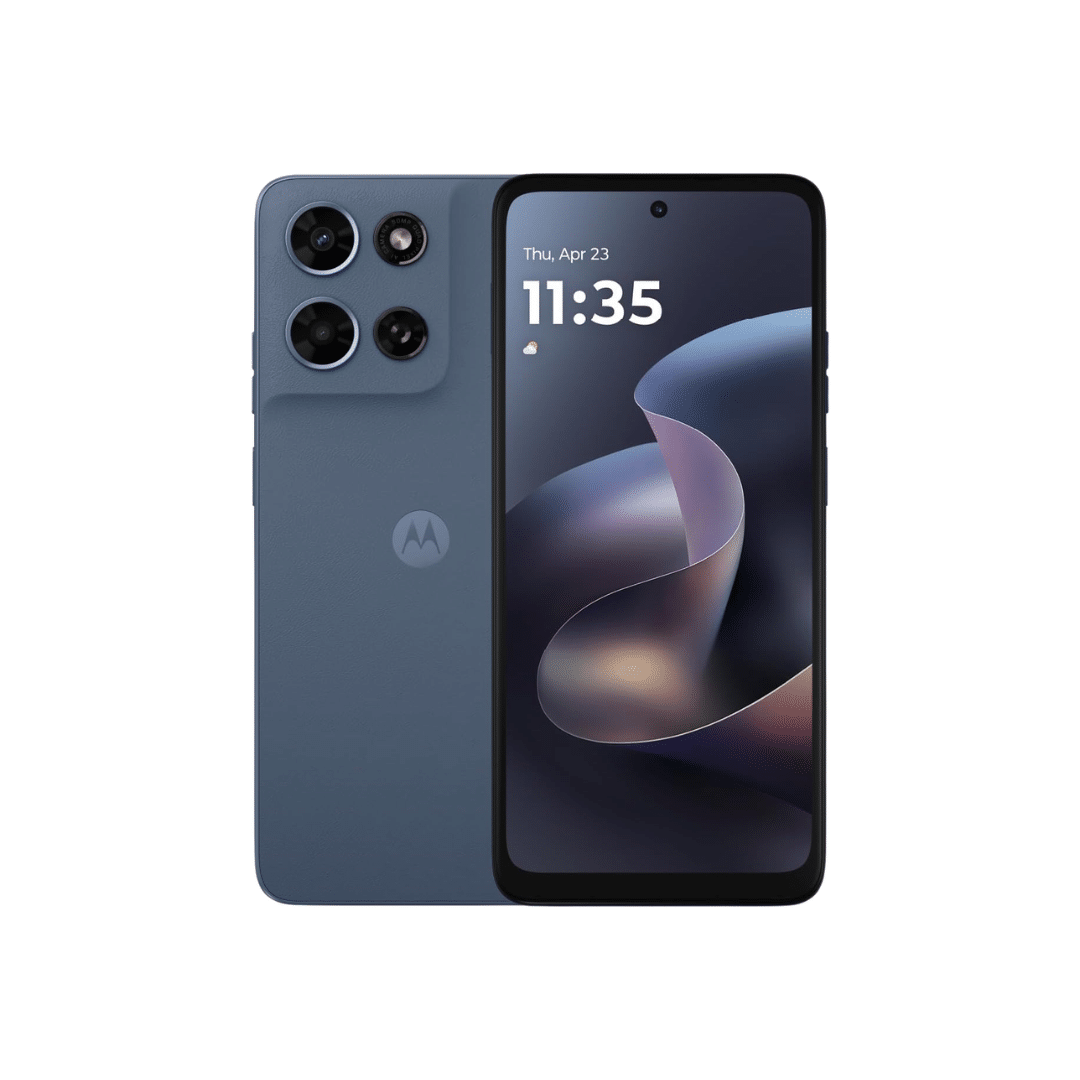
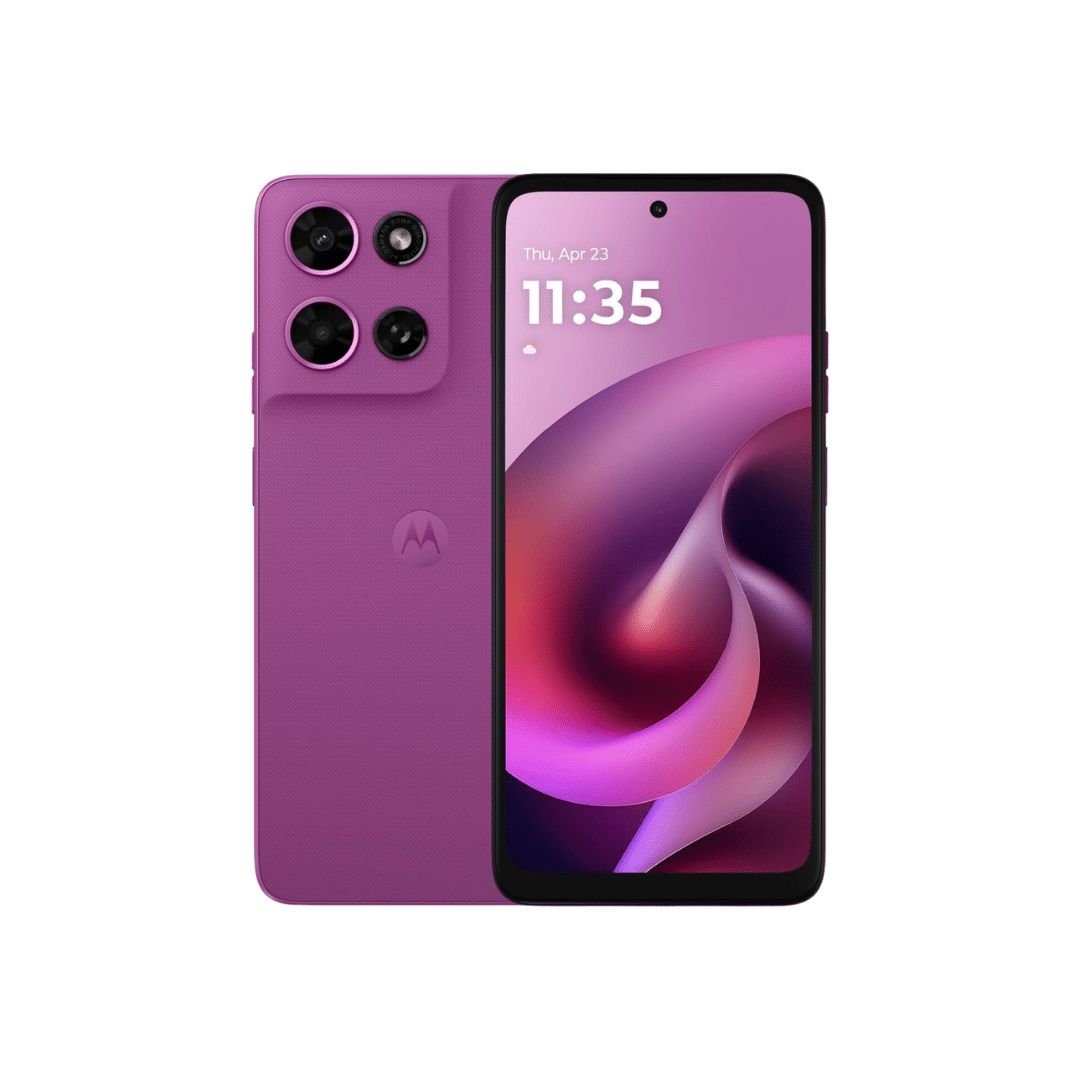
Motorola Moto G (2026)
Motorola Moto G (2026) Key Features
Brand: Motorola
Release Date: December 2025
Price in Kenya: KSh 24,000
Display: 6.7-inch IPS LCD, 720 x 1604 pixels, 120Hz, 1,000 nits peak
Protection: Corning Gorilla Glass 3
Processor: MediaTek Dimensity 6300 (6nm), octa-core up to 2.4GHz
RAM: 4GB
Storage: 128GB, expandable via dedicated microSDXC slot
Rear Camera: 50MP f/1.8 main with PDAF, 2MP macro
Front Camera: 32MP f/2.2
Video Recording: 1080p at 30fps (rear and front)
Battery: 5,200mAh
Charging: 30W wired; charger not included
Connectivity: 5G, dual-band Wi-Fi 5, Bluetooth, NFC, FM radio, USB-C 2.0, Nano-SIM and eSIM
Audio: Stereo speakers with Dolby Atmos, 3.5mm headphone jack, 24-bit/192kHz Hi-Res audio
Build: Gorilla Glass 3 front, eco-leather (silicone polymer) back, plastic frame
Water & Dust Resistance: Water-repellent design; no official IP rating
Dimensions & Weight: 167.2 x 76.4 x 8.5mm, 202g
Operating System: Android 16
Security: Side-mounted fingerprint sensor, face unlock
KSh 24,000
Warranty: Registered by the buyer with the manufacturer. Need help? Message us and we'll guide you.
Specs: Motorola Moto G (2026) details checked against official data (24th November 2026). Spotted something off? Tell us on WhatsApp or call 0728 270 084.

Cash on Delivery within Nairobi
Pay on Order outside Nairobi
Motorola Moto G (2026) Price in Kenya, Full Specifications and Review (2026)
The Motorola Moto G (2026) price in Kenya is KSh 24,000. It was announced on 5 November 2025 and released on 11 December 2025. This budget 5G phone has a 6.7-inch HD+ IPS LCD with a 120Hz refresh rate, 1,000 nits peak brightness and Corning Gorilla Glass 3. It runs on the MediaTek Dimensity 6300 chip with 4GB of RAM and 128GB of storage, which you can expand through a dedicated microSDXC slot. On the back are a 50MP f/1.8 main camera with PDAF and a 2MP macro camera, and on the front is a 32MP selfie camera. Both shoot 1080p video at 30fps. A 5,200mAh battery charges at 30W. The phone also has stereo speakers with Dolby Atmos, a 3.5mm headphone jack, NFC, FM radio, Nano-SIM plus eSIM, and a side-mounted fingerprint sensor. It runs Android 16 and comes in an eco-leather finish in Pantone Slipstream and Cattleya Orchid.
The Moto G (2026) is built for budget buyers who want 5G, a smooth screen, strong battery life and loud, clear speakers without spending much. It suits students, first-time smartphone owners, boda boda riders, small business owners running WhatsApp and M-Pesa all day, and parents buying a reliable phone for a teenager. In GSMArena’s testing, the battery lasted nearly 17 hours of active use, which carries it comfortably through long days and frequent power cuts. The headphone jack, FM radio and expandable storage add practical value that many newer phones have dropped.
The trade-offs are typical of the price but worth knowing. The 720p display looks softer than the Full HD screens on rivals like the Galaxy A18 4G. There is no ultrawide camera, and video recording tops out at 1080p at 30fps. With 4GB of RAM, multitasking is limited, and the Dimensity 6300 is modest for gaming. The phone has a water-repellent design but no official IP rating. Motorola’s update promise of two OS upgrades and three years of security updates is short next to Samsung’s six years. There is no charger in the box.
The comparison at Phonesstore Kenya is the Samsung Galaxy A18 4G at KSh 26,500. The Samsung has a sharper Full HD AMOLED display, an ultrawide camera, an IP64 rating and six years of OS and security updates. The Moto G (2026) counters with 5G, a 120Hz screen, a bigger battery with faster charging, stereo speakers, a headphone jack and a lower price.
You can buy the Motorola Moto G (2026) from Phonesstore Kenya, where it is available with competitive pricing and nationwide delivery across Kenya.
Motorola Moto G (2026) Full Specifications
Network
| Feature | Specification |
|---|---|
| Technology | GSM, HSPA, LTE, 5G |
| SIM | Nano-SIM and eSIM |
Launch
| Feature | Specification |
|---|---|
| Announced | 5 November 2025 |
| Released | 11 December 2025 |
Body
| Feature | Specification |
|---|---|
| Dimensions | 167.2 x 76.4 x 8.5mm |
| Weight | 202g |
| Build | Gorilla Glass 3 front, silicone polymer (eco-leather) back, plastic frame |
| Water Resistance | Water-repellent design |
Display
| Feature | Specification |
|---|---|
| Type | IPS LCD, 120Hz |
| Size | 6.7 inches |
| Resolution | 720 x 1604 pixels, 20:9 (about 262ppi) |
| Peak Brightness | 1,000 nits |
| Protection | Corning Gorilla Glass 3 |
Platform
| Feature | Specification |
|---|---|
| Operating System | Android 16 |
| Chipset | MediaTek Dimensity 6300 (6nm) |
| CPU | Octa-core (2x 2.4GHz Cortex-A76, 6x 2.0GHz Cortex-A55) |
| GPU | Mali-G57 MC2 |
Memory
| Feature | Specification |
|---|---|
| RAM | 4GB |
| Storage | 128GB |
| Card Slot | microSDXC (dedicated slot) |
Main Camera
| Feature | Specification |
|---|---|
| Main | 50MP, f/1.8, PDAF |
| Macro | 2MP |
| Features | LED flash, HDR, panorama |
| Video | 1080p at 30fps |
Selfie Camera
| Feature | Specification |
|---|---|
| Camera | 32MP, f/2.2 |
| Video | 1080p at 30fps |
Sound
| Feature | Specification |
|---|---|
| Loudspeakers | Stereo speakers with Dolby Atmos |
| 3.5mm Jack | Yes |
| Hi-Res Audio | 24-bit/192kHz |
Connectivity
| Feature | Specification |
|---|---|
| Wi-Fi | Wi-Fi 802.11 a/b/g/n/ac, dual-band |
| Bluetooth | Yes (version not specified) |
| Positioning | GPS, Galileo, GLONASS |
| NFC | Yes |
| Radio | FM radio |
| USB | USB Type-C 2.0 |
Sensors
| Feature | Specification |
|---|---|
| Sensors | Side-mounted fingerprint, accelerometer, gyro, proximity, compass, barometer |
Battery
| Feature | Specification |
|---|---|
| Capacity | 5,200mAh |
| Charging | 30W wired |
| Charger in Box | No |
Misc
| Feature | Specification |
|---|---|
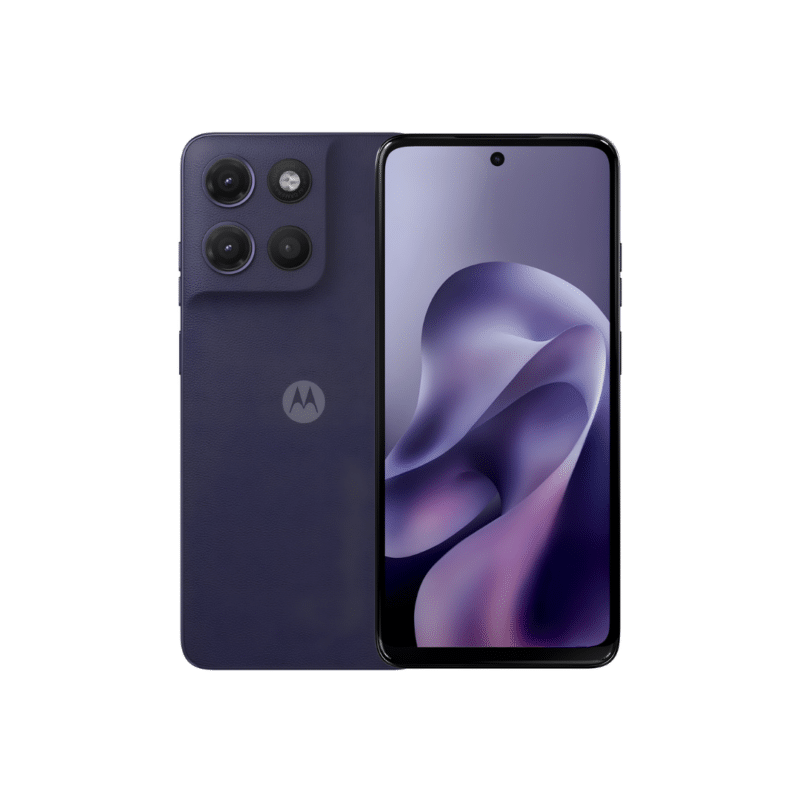
| Colours | Pantone Slipstream, Pantone Cattleya Orchid |
| Model | XT2613-1 |
| Price in Kenya | KSh 24,000 |
Design and Build
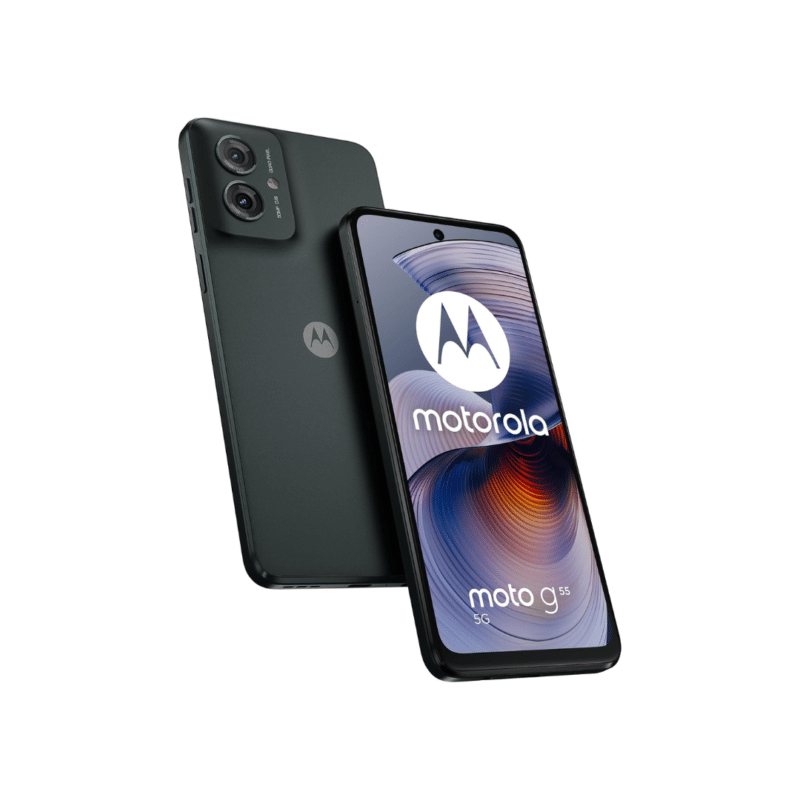
The Moto G (2026) looks and feels better than its price suggests, mainly thanks to its eco-leather back. This silicone polymer finish has a soft, textured feel that is grippier than glossy plastic or glass. It is less likely to slip out of a hand on a crowded matatu or off the seat of a boda boda, and it resists fingerprints and smudges, so the phone stays clean-looking without constant wiping. The two Pantone colours give the phone more personality than most budget handsets: Slipstream is a calm, muted tone and Cattleya Orchid a softer purple.
At 167.2 x 76.4 x 8.5mm and 202g, it is a large phone, but its weight is well balanced and the 8.5mm thickness keeps it comfortable to hold. It is slightly heavier and thicker than the Galaxy A18 4G, which weighs 196g and is 7.7mm thick, but the textured back makes it feel secure in hand. Using it with one hand takes some stretching, as with any 6.7-inch phone, and most people will use two hands for typing.
The frame is plastic, which keeps the weight and cost down but is less premium and more prone to scuffs than aluminium. The front uses Corning Gorilla Glass 3, an older generation of Gorilla Glass that offers reasonable scratch resistance but is less drop-resistant than newer versions. A screen protector and a case are worth adding, since neither comes in the box. The eco-leather back is softer than glass and won’t shatter, but it can scuff, stain or wear at the edges over time, especially if the phone is kept in a pocket with keys or coins.
The fingerprint sensor sits in the power button on the right side, which is a natural place for the thumb to rest. There is a 3.5mm headphone jack, a USB-C port and stereo speaker grilles, plus a tray with a dedicated microSD slot. Physical buttons are clicky and reliable, which suits users who often operate their phone in a pocket or with gloves.
Durability
The Moto G (2026) has a water-repellent design, but Motorola does not give it an official IP rating for water or dust resistance. Water-repellent design means it can usually handle light splashes, a few raindrops or a spill on a table. It is not meant to be submerged, used in heavy rain or rinsed under a tap.
During the long rains, the phone should be kept in a pocket or bag when walking between stages and buildings, and dried quickly if it gets wet. Boda boda riders and outdoor workers who are often exposed to rain should consider a water-resistant pouch or case for extra protection. The more expensive Moto G Power (2026) is the cheapest Motorola in this range with full IP68 and IP69 ratings and military-grade durability testing, so buyers who need a tough phone should consider it.
Dust is another consideration on dry-season roads, building sites and dusty upcountry towns. Without a dust-resistance rating, the ports and speaker grilles can collect dust over time. Cleaning them gently with a soft, dry brush and using a case with port covers helps. By comparison, the Galaxy A18 4G carries an IP64 rating, which means full protection against dust and resistance to splashes from any direction, a meaningful advantage in harsh conditions.
Display
The 6.7-inch IPS LCD is large and smooth, with a 120Hz refresh rate that is rare at this price. A higher refresh rate means the screen updates up to 120 times per second instead of the usual 60, so scrolling through WhatsApp chats, TikTok, Instagram and news feeds feels fluid and responsive. Once used to it, 60Hz screens can feel choppy, and the Moto G’s 120Hz is even smoother than the 90Hz on the Galaxy A18 4G.
The main weakness is resolution. At 720 x 1604 pixels, or about 262 pixels per inch, it is an HD+ screen rather than Full HD. Text, icons and images look slightly soft compared with Full HD displays, especially when reading small text or looking closely at photos. For streaming videos on YouTube, Netflix and Showmax, browsing social media and messaging, most people will find it perfectly acceptable, but users who read a lot of documents or care about sharpness will notice the difference. The Galaxy A18 4G’s Full HD Super AMOLED screen is noticeably sharper, with deeper blacks and more vivid colours.
Brightness is a strength. Motorola rates the screen at 1,000 nits peak, and GSMArena measured about 948 nits, which is bright for a budget LCD. That helps visibility outdoors under Nairobi’s midday sun, at a busy market or on the coast, where dim screens can be hard to read. Viewing angles are good, as is usual for IPS LCDs, and colours look natural, although less punchy than AMOLED. GSMArena measured a contrast ratio of 1,851:1, which is good for an LCD, but blacks still appear dark grey rather than truly black, and that is most visible when watching films in a dark room.
Performance
The Moto G (2026) uses the MediaTek Dimensity 6300, a 6nm 5G chip with two Cortex-A76 cores at 2.4GHz for demanding tasks and six efficient Cortex-A55 cores at 2.0GHz for lighter work. It’s a common chip in budget 5G phones. GSMArena measured AnTuTu scores of about 417,000 on version 10 and 552,000 on version 11, and a Geekbench 6 multi-core score of about 2,100, which places it in the entry-level performance class.
In everyday use, the phone handles the basics well. WhatsApp, M-Pesa, Facebook, Instagram, YouTube, Google Maps, banking apps and web browsing run smoothly, helped by the 120Hz display. Opening heavier apps and switching between them can be slower than on mid-range phones. With only 4GB of RAM, apps in the background are more likely to reload when switched back to, which can slow multitasking for heavy users.
Gaming is possible but limited. The Mali-G57 MC2 graphics chip runs casual games like Candy Crush, Subway Surfers and Ludo King without issues. Popular titles like Call of Duty Mobile, PUBG Mobile, Free Fire and eFootball are playable at low to medium settings. However, GSMArena’s 3DMark Wild Life Extreme score of about 384 confirms this is not a gaming phone, so heavy gamers should look at more powerful options.
The 6nm chip is efficient, which helps battery life and keeps the phone from heating up much during everyday use, even on hot days. Long gaming sessions or extended navigation in the midday sun can warm it, but it stays comfortable for typical use.
Memory and Storage
The Moto G (2026) comes with 4GB of RAM and 128GB of storage. 4GB of RAM is the minimum for a smooth Android experience today. It is enough for messaging, social media, calls and light multitasking, but it limits how many apps stay open in the background. Buyers who constantly switch between many apps, keep dozens of browser tabs open or play heavy games will notice slowdowns, so it suits lighter users best.
128GB of storage is enough for most users’ apps, photos, videos and WhatsApp media. A big advantage is the dedicated microSDXC slot, which means users can add a memory card without giving up the second SIM or using eSIM. That is useful for storing music, films for long bus journeys, offline maps and photos, and it makes the phone more future-proof than rivals without expandable storage. WhatsApp media can quickly fill storage in Kenyan family and business groups, so a memory card is a cheap and practical upgrade.
Software and Updates
The Moto G (2026) runs Android 16 with Motorola’s Hello UX, which is close to stock Android. The interface is clean and simple, with fewer duplicate apps and less clutter than many budget brands. Motorola adds useful extras such as its famous Moto Actions gestures, including the double-chop motion to turn on the flashlight, which is useful during power cuts, and a twist of the wrist to open the camera. These gestures are quick and genuinely practical in daily life.
Some pre-installed apps and suggested downloads appear during setup, as with most budget phones, but they can be uninstalled. Motorola’s security features and Family Space for parental controls are also helpful for parents buying the phone for a child.
Software support is the Moto G (2026)’s weakest point compared with Samsung. Motorola’s 2026 budget Moto G phones are promised two OS upgrades and three years of security updates. That means the phone should receive Android 17 and Android 18, with security updates until around the end of 2028. That is acceptable for a budget phone, but it is far behind the Galaxy A18 4G, which Samsung promises six OS upgrades and six years of security updates. Buyers who keep phones for many years should weigh this carefully, since security updates protect banking and M-Pesa apps from threats.
Cameras
The main camera is a 50MP sensor with a bright f/1.8 aperture and phase-detection autofocus (PDAF). It combines pixels to produce 12.5MP photos by default, which improves detail and reduces noise. In good daylight, photos are sharp, with natural colours and decent dynamic range. They are good enough for social media, product photos for small businesses selling on WhatsApp and Instagram, family photos and everyday moments. HDR helps balance bright skies and shadows on sunny days.
In low light, such as indoor events, restaurants or evening scenes, quality drops noticeably. Photos become softer and noisier, and there is no optical image stabilisation to help with steady shots. Holding the phone still and using night mode where available improves results, but expectations should match the price.
The second camera is a 2MP macro sensor for close-up shots of flowers, food and small objects. Its low resolution means macro photos are soft and lack detail, so it adds little real value. Importantly, there is no ultrawide camera, which limits the ability to capture group photos, wide landscapes and architecture. The Galaxy A18 4G includes a 5MP ultrawide camera, which gives it more flexibility on trips to Diani, safaris in the Mara or group outings.
The 32MP selfie camera is a highlight. It captures detailed, clear selfies in good light, which suits video calls, social media content and profile photos. Selfies in low light are softer but usable. It has noticeably more resolution than the Galaxy A18 4G’s 13MP selfie camera.
Video
Both the main and selfie cameras record video at up to 1080p and 30fps. Footage looks clear and decent in good light, which is fine for TikTok, Instagram Reels, WhatsApp status updates and family videos. Electronic stabilisation helps smooth out shake when walking, but moving shots can still look a little jittery.
There is no 4K recording and no 60fps option, so video quality and smoothness are basic. Content creators who want high-quality, smooth video should look at more expensive phones. In low light, video becomes noisy and soft, so outdoor daytime filming gives the best results.
Audio
Audio is one of the Moto G (2026)’s strongest areas. It has stereo speakers with Dolby Atmos tuning, and GSMArena rated its loudness at -21.1 LUFS, classed as Excellent. That means the speakers get loud and clear, which is ideal for watching videos, listening to music, playing games and taking speakerphone calls. In noisy environments like a busy home, a market stall or a matatu, the loud speakers make a real difference. Dolby Atmos adds a wider, more immersive feel to films and music.
The 3.5mm headphone jack is a welcome feature that many phones have dropped. It lets users plug in affordable wired earphones without needing Bluetooth or an adapter, and it supports 24-bit/192kHz Hi-Res audio for better sound quality through good wired headphones. The FM radio also works through wired earphones as an antenna, so users can listen to Kenyan radio stations like Classic 105, Radio Jambo, Citizen Radio and Kiss FM without using data. That is a big plus during power cuts and in areas with weak internet.
Battery Life and Charging
The Moto G (2026) packs a large 5,200mAh battery, and it is one of the phone’s best features. GSMArena measured an Active Use Score of 16 hours and 48 minutes, which is very strong. In real-world use, that means a full day of heavy use with WhatsApp, social media, calls, video streaming and M-Pesa transactions, and often a day and a half or more for moderate users. The efficient Dimensity 6300 and HD+ screen help stretch battery life.
That endurance is especially valuable in Kenya. Long battery life helps during power cuts, on long journeys upcountry, during days in the field, or for boda boda riders and drivers who use navigation and ride-hailing apps all day. Users who are away from charging points for long periods will appreciate not needing to charge in the middle of the day.
Charging is rated at 30W, which is faster than the Galaxy A18 4G’s 25W. GSMArena’s test, using a 68W Motorola charger, reached about 25% in 15 minutes. A full charge takes well over an hour. That is adequate for overnight charging or a quick top-up when power returns after an outage, but it is slower than the fast charging on many mid-range phones.
There is no charger in the box, only a USB-C cable. Buyers need a compatible USB-C charger. A charger rated at 30W or more gets the full charging speed. Many existing phone chargers work, but slower chargers will take longer. A power bank is a smart companion for frequent travellers and during long outages.
Connectivity
The Moto G (2026) supports 5G, which gives it faster mobile internet speeds where Safaricom and Airtel 5G coverage is available. 5G is growing in Nairobi, Mombasa, Kisumu and other major towns, and having it makes the phone more future-proof as coverage expands. 5G band support can vary by model and region, so buyers should confirm compatibility with their network. Where 5G is not available, the phone uses 4G LTE.
Dual-band Wi-Fi 5 gives fast, stable home and office internet, and the USB-C 2.0 port handles charging and basic file transfers. GPS, Galileo and GLONASS give accurate location for Google Maps, Uber, Bolt and delivery apps, which suits drivers and riders in Nairobi’s busy streets. Bluetooth is supported, although the version is not specified.
NFC is included, which allows contactless payments with Google Wallet where supported and tapping compatible cards and accessories. The phone supports Nano-SIM plus eSIM. eSIM availability depends on the network, so buyers should check with Safaricom or Airtel. The FM radio, headphone jack and dedicated microSD slot round out a practical, well-connected budget phone.
Who Is the Motorola Moto G (2026) For?
Ideal for:
- Budget buyers who want 5G and a smooth 120Hz display
- Users who need long battery life through busy days and power cuts
- Listeners who want loud stereo speakers, a headphone jack and FM radio
- Buyers who want expandable storage with a dedicated microSD slot
- First-time smartphone users and students on a tight budget
Not ideal for:
- Users who want a sharp Full HD or AMOLED display
- Photographers who want an ultrawide camera or 4K video
- Heavy gamers and multitaskers who need more power and RAM
- Buyers who want long-term software support for many years
- Users who need official water and dust resistance
Pros and Cons
The Motorola Moto G (2026)’s main strengths are battery life, audio and value. Its 5,200mAh battery delivers excellent endurance, and 30W charging is faster than many rivals at this price. The 6.7-inch 120Hz display is smooth and bright enough for outdoor use, and the loud stereo speakers with Dolby Atmos are among the best in its class. 5G, NFC, eSIM, FM radio, a 3.5mm headphone jack and a dedicated microSD slot make it highly practical, and the eco-leather back feels grippy and premium. The 32MP selfie camera and near-stock Android 16 software add to the appeal at KSh 24,000.
Its main limitations are its display resolution, cameras and software support. The 720p screen looks softer than Full HD rivals. There is no ultrawide camera, the 2MP macro adds little, and video is limited to 1080p at 30fps. With 4GB of RAM and the modest Dimensity 6300, multitasking and gaming are limited. The phone has no official IP rating, the plastic frame and Gorilla Glass 3 are basic, and there is no charger in the box. Motorola’s two OS upgrades and three years of security updates fall far behind Samsung.
Where to Buy Motorola Moto G (2026) in Kenya
You can buy the Motorola Moto G (2026) from Phonesstore Kenya, a trusted retailer for genuine smartphones in Kenya. Phonesstore Kenya offers competitive pricing, reliable service, and nationwide delivery, making it convenient to order from anywhere in the country.
Motorola Moto G (2026) vs Samsung Galaxy A18 4G
The Motorola Moto G (2026) and Samsung Galaxy A18 4G are close in price, but they make different trade-offs. The Moto G (2026) wins on connectivity, smoothness, battery and audio. It supports 5G, where the Samsung is 4G only, and its 120Hz display is smoother than the Samsung’s 90Hz screen. Its larger 5,200mAh battery and faster 30W charging beat the Samsung’s 5,000mAh and 25W, and its stereo speakers, 3.5mm headphone jack and FM radio make it better for media and music. The 32MP selfie camera is also sharper than the Samsung’s 13MP, and it costs KSh 2,500 less.
The Samsung Galaxy A18 4G wins on display quality, cameras, durability and long-term support. Its 6.7-inch Full HD Super AMOLED screen is far sharper and more vivid, with deeper blacks than the Moto’s HD+ LCD. It adds a 5MP ultrawide camera for group photos and landscapes. Its IP64 rating gives proper dust and splash protection, and it is slimmer and lighter. Most importantly, Samsung promises six OS upgrades and six years of security updates, compared with Motorola’s two OS upgrades and three years.
| Feature | Motorola Moto G (2026) | Samsung Galaxy A18 4G |
|---|---|---|
| Price | KSh 24,000 | KSh 26,500 |
| Display | 6.7-inch HD+ IPS LCD, 120Hz | 6.7-inch FHD+ Super AMOLED, 90Hz |
| Chipset | MediaTek Dimensity 6300 | Exynos 1610 |
| RAM and Storage | 4GB, 128GB | 4GB, 128GB |
| Network | 5G | 4G |
| Rear Cameras | 50MP main, 2MP macro | 50MP main, 5MP ultrawide, 2MP macro |
| Selfie Camera | 32MP | 13MP |
| Battery | 5,200mAh | 5,000mAh |
| Charging | 30W | 25W |
| Stereo Speakers | Yes | Not specified |
| Headphone Jack | Yes | Not specified |
| Water and Dust Resistance | Water-repellent, no IP rating | IP64 |
| Weight and Thickness | 202g, 8.5mm | 196g, 7.7mm |
| Updates | Two OS upgrades, three years of security | Six OS upgrades, six years of security |
Choose the Motorola Moto G (2026) if you want 5G, a smoother 120Hz display, longer battery life with faster charging, loud stereo speakers, a headphone jack and a lower price. Choose the Samsung Galaxy A18 4G if you want a sharper AMOLED display, an ultrawide camera, IP64 protection and six years of updates.
Frequently Asked Questions
What is the price of the Motorola Moto G (2026) in Kenya?
The Motorola Moto G (2026) costs KSh 24,000 at Phonesstore Kenya, with 4GB of RAM and 128GB of storage.
Does the Moto G (2026) support 5G?
Yes. It supports 5G on compatible networks, and falls back to 4G LTE where 5G is not available. Band support can vary by model, so buyers should confirm compatibility with Safaricom or Airtel.
Is the Moto G (2026) waterproof?
No. It has a water-repellent design that handles light splashes, but it has no official IP rating and should be kept away from heavy rain and water.
How long does the battery last?
GSMArena measured an Active Use Score of 16 hours and 48 minutes. In real-world use, it lasts a full day of heavy use and longer for moderate users.
Does the Moto G (2026) come with a charger?
No. It comes with a USB-C cable only, so a separate charger rated at 30W or more is needed for the fastest charging.
Is the Moto G (2026) good for gaming?
It handles casual games well and runs popular titles like Call of Duty Mobile and Free Fire at lower settings. It is not designed for heavy gaming.
Does it have a headphone jack and FM radio?
Yes. It has a 3.5mm headphone jack with Hi-Res audio support and FM radio, which works with wired earphones.
Can I expand the storage?
Yes. A dedicated microSDXC slot lets users add a memory card without giving up a SIM slot.
Does the Moto G (2026) have NFC?
Yes. NFC supports contactless payments with Google Wallet where available, and tapping compatible accessories.
How many software updates will it get?
Motorola’s 2026 budget Moto G phones are promised two OS upgrades and three years of security updates. That is shorter than Samsung’s six years.
Does it have an ultrawide camera?
No. It has a 50MP main camera and a 2MP macro camera, without an ultrawide lens.
Should buyers choose the Motorola Moto G (2026) or the Samsung Galaxy A18 4G?
The Samsung Galaxy A18 4G at KSh 26,500 at Phonesstore Kenya suits buyers who want a sharper AMOLED display, an ultrawide camera, IP64 protection and six years of updates. The Motorola Moto G (2026) suits buyers who want 5G, a 120Hz screen, longer battery life, stereo speakers and a lower price.
| Internal Storage | 4GB/128GB |
|---|
You must be logged in to post a review.
Motorola Phones Price in Kenya
Motorola is known for clean, near-stock Android software, reliable performance, and genuinely wide model variety. Phones Store Kenya stocks one of the most complete Motorola ranges in Nairobi, spanning budget to flagship — including Motorola's foldable Razr line.Moto G Series
Motorola's core value line, offering solid everyday performance at accessible prices — currently including the G06, G06 Power, G17, G20, G30, G35, G37, G56, G57, G57 Power, G77, G86, G86 Power, Moto G (2026), and Moto G Play (2026). Given how many G-series variants exist at once, the numbering generally reflects newer or higher-specced models within the same generation, so it's worth comparing current listings by price and specs rather than assuming higher numbers always mean better value.Moto Edge Series
Motorola's step-up tier, with stronger cameras, processors, and display quality — currently including the Edge 60 5G, Edge 60 Stylus, Edge 70, and Edge 70 Fusion.Motorola Razr — Foldable Phones
The Motorola Razr 60 Ultra brings Motorola's flip-phone heritage into a modern foldable smartphone, combining a large external display for quick tasks with a full smartphone experience when unfolded — a genuinely different form factor from the standard G and Edge lines.Motorola S-Series
The Motorola S50 Neo rounds out the range as part of Motorola's broader smartphone lineup outside the main G and Edge naming.Which Motorola Should You Buy?
Want reliable everyday performance at the lowest price? Start with the Moto G series, choosing based on your budget within the range. Want a noticeably better camera and display without full flagship pricing? Go Edge series. Want something genuinely different — a compact foldable phone? The Razr 60 Ultra is Motorola's answer to that.Why Buy Motorola from Phones Store Kenya?
- Genuine Motorola devices, sourced and verified
- One of the widest Motorola ranges in Nairobi — Moto G, Edge, S-series, and Razr foldables
- Fast Nairobi delivery and nationwide shipping across Kenya
- Friendly, responsive customer support before and after your purchase
Frequently Asked Questions About Motorola in Kenya
What's the difference between Moto G and Moto Edge? Moto G is Motorola's value-focused line built around affordability and reliability, while Edge sits above it with stronger cameras, processors, and premium build quality. Is the Razr 60 Ultra durable as a foldable phone? Modern foldables like the Razr line use reinforced hinge mechanisms and flexible display technology rated for tens of thousands of folds, though as with any foldable, avoiding excess pressure on the screen when open is good practice. Does Motorola still offer clean, near-stock Android? Yes — this remains one of Motorola's consistent selling points across the G and Edge lines, with minimal pre-installed bloatware compared to many competitors.Visit or Contact Phones Store Kenya
All Motorola products listed above are readily available at our Nairobi store or online. Reach out to check current stock, pricing, or place an order:


Reviews
There are no reviews yet.